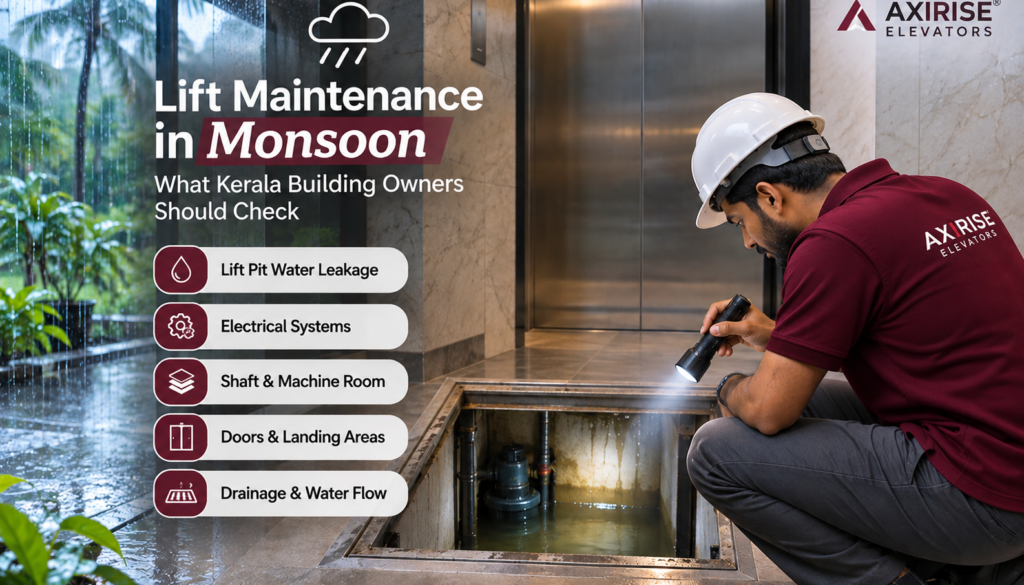
Lift Maintenance in Monsoon: While the monsoon season provides much-needed rain in Kerala, it can also create additional problems for a building that has lifts. The excess rain and humidity can cause problems in areas of the building that would typically be overlooked, such as:
- Lift Pit
- Lift Shaft
- Lift Machine Room
- Electrical Systems
Therefore, don’t treat lift service as routine during the monsoon. A proper monsoon service helps identify leaks, moisture-related issues, corrosion, and more, avoiding expensive repairs later.
Lift Maintenance in Monsoon: Why Does Monsoon Affect Elevator Performance?
The elevator has various mechanical and electrical parts that can be affected by damp. Damp can come into the building through cracks, poor sealing, drainage issues, and seepage around the shaft.
This damp can cause issues to any electrical components and connections. Constant exposure can cause corrosion.
Preventive maintenance is very important for buildings in Kerala. Before the monsoon, it is recommended that you check your roofs, drains, seepage, and any water entry points.
1. Check the Lift Pit for Water Leakage
Lift Maintenance in Monsoon: One of the most important areas to check during the monsoon is your lift pit. As it sits at the bottom of your elevator shaft, water coming into the building will pool here.
Water leaking into your lift pit can occur due to groundwater, moisture on walls, faulty waterproofing, blockages in pipework or water coming through nearby areas.
Your building owners should ask your maintenance team to check for:
- Standing water
- Damp walls or visible seepage
- Rust or corrosion
- Blocked drainage points
- Water marks indicating previous flooding
- Damage to components located inside the pit
Do not allow unqualified people to enter the lift pit. Kerala’s official lift inspection guidance states that inspectors should not enter a pit containing water and that the pit should be dry before inspection.
2. Inspect the Machine Room and Electrical Areas
Check for dampness in the machine room and control areas. This could come from roof leaks, wall damp, condensation, or poor ventilation, creating complications with electrical equipment.
Technicians should check the relevant electrical connections, control systems, wiring, ventilation systems, and other components in accordance with the maintenance requirements from the elevator manufacturer when performing maintenance in the rainy season.
If you are seeing frequent tripping, strange lift operation, or intermittent faults during the rainy season, do not just put this down to power issues. Get a qualified technician to investigate why this is happening.
3. Check Elevator Doors and Landing Areas
Sometimes rain can penetrate the building via entrance doors. It can pool in the lift landing areas. This causes dirt and moisture problems with the door runners and sensors.
The maintenance department must ensure doors open and close smoothly and that there is no build-up of moisture in the lift landing area.
Building owners must ensure that during cleaning operations, large amounts of water are not directed into the lift entrance area.
4. Inspect Drainage Around the Lift
Ensure your drainage is working well.
Ensure that any floor drains, rainwater outlets, basement drainage, and other areas in the vicinity are clear. This will help prevent pooling of water around the lift area and getting into sensitive areas.
If you have had issues with water leaking into the lift pit in the past, don’t leave it until the next heavy rainfall to look into it. Ensure you find out the cause and rectify the issue.
5. Pay Attention to Unusual Lift Behaviour
Some warning signs may appear before a major problem develops.
During the rainy season, building owners should report:
- Unusual sounds or vibrations
- Jerky movement
- Door opening or closing problems
- Repeated electrical tripping
- Unexpected lift stoppages
- Water or dampness around the lift area
- Unusual odour from electrical areas
These signs should be reported to the maintenance provider rather than ignored.
6. Schedule a Professional Monsoon Inspection
It is important to keep lifts serviced regularly. However, performing a monsoon check can help determine weather-related risk factors.
Check your Lifts for: Lift Pit, Lift Shaft, Machine Room, Electrical Systems, Drainage, Doors, Safety Devices, and if there have been any issues with water in the past.
Keeping track of when lifts have been serviced and any issues that have been repaired can be useful. Preventative maintenance should help identify any issues before they become major failures.
Protect Your Lift Before the Rain Gets Worse
Lift Maintenance in monsoon is about catching minor issues before they cause major problems.
Owners in Kerala should look out for issues around water seepage in the lift pit, dampness, drainage, and electrical issues. This will help ensure your elevator is well maintained and will offer you a smooth experience throughout the year.
At Axirise Elevators, we will be able to discuss for lift Maintenance in Monsoon what maintenance you need to carry out on your elevator. This will help us to identify any issues that may need attention prior to or during the monsoon.
Don’t wait until you have a big issue with water or dampness. Plan your maintenance check ahead of the next heavy rains.